

FEATURE
Etching
Etching was originally invented as a method for adding decoration to armour during the Middle Ages. Artists began to use metal plates for printing in the 15th century, when Albrecht Durer made work on iron plates. Later artists such as Andrea Mantegna in Italy and Rembrandt in Holland went on to make etchings on copper.
TECHNIQUE
Etching
Etching was originally invented as a method for adding decoration to armour during the Middle Ages. Artists began to use metal plates for printing in the 15th century, when Albrecht Durer made work on iron plates. Later artists such as Andrea Mantegna in Italy and Rembrandt in Holland went on to make etchings on copper.
Traditionally a metal plate, usually copper or zinc, is coated with an acid-resistant material called ground. Using a sharp needle, lines are made through the ground, revealing the plate beneath. The plate is immersed in a dilute acid bath and the acid etches the plate where it has been revealed, making grooves in the surface of the plate which will then hold ink.
Apart from this traditional approach, there are many other ways of preventing the acid from ‘biting’ the plate, using varnishes, sticky tape or spray paint to provide resistance to the acid. Aquatint, spit bite, sugar lift and white ground techniques allow more painterly marks.
The endless possibility of this technique is the really exciting thing about etching.
Learn more about Etching
Etching: Hard Ground and Aquatint on Copper| 4 Wednesday evenings | February 2027
Whether you are looking for a greater understanding of the hard ground technique or are a complete beginner to etching, you will come out of this three evening course with new skills and unique prints.
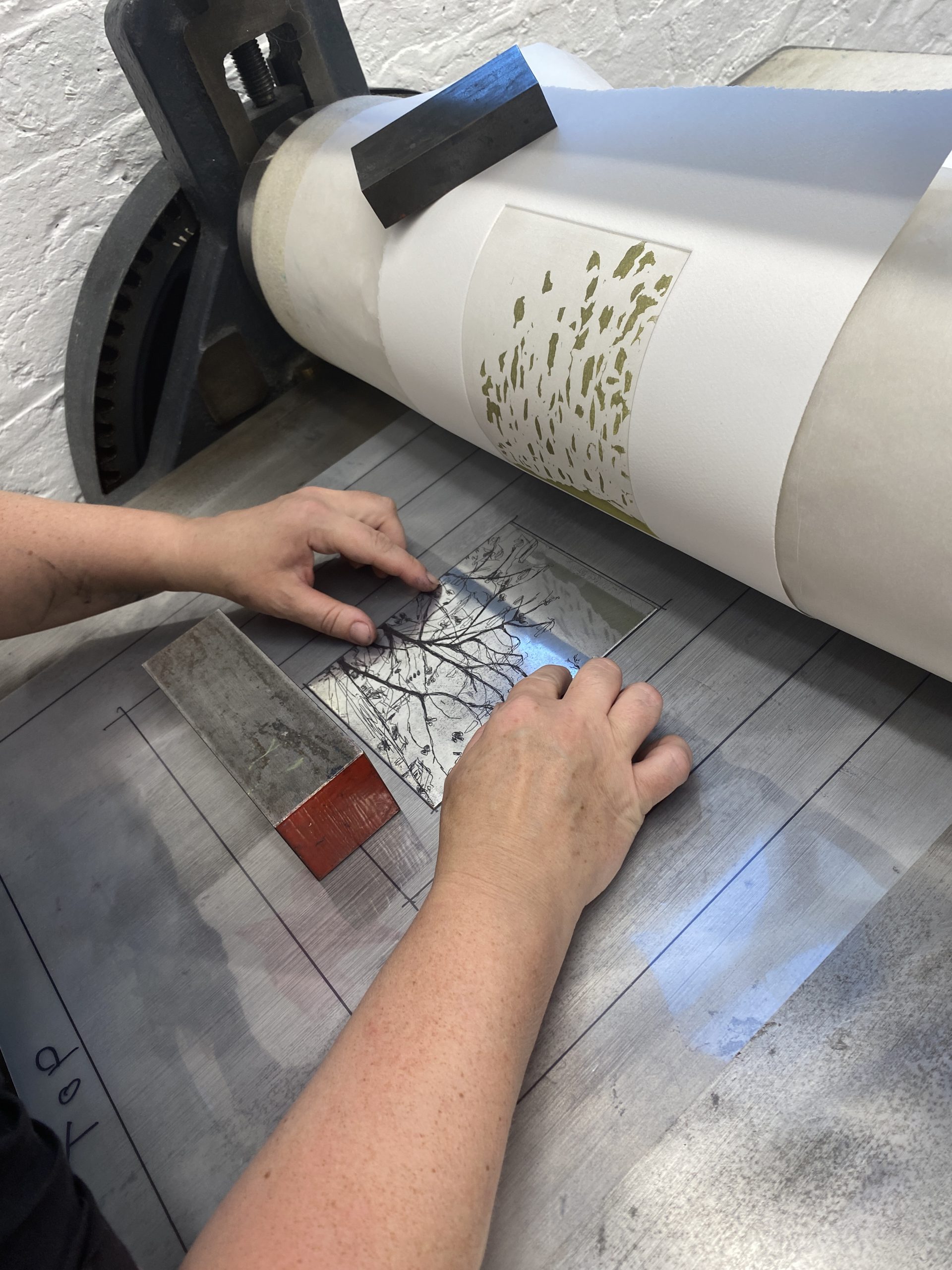
Etching Year 2 (Intermediate & Advanced)| 40 weeks | Monday evenings | September 2025
The year will focus on consolidating your etching knowledge, on developing ideas, and on ways to bring ideas and technique together. There will be group discussion, group crit and one-to-one tutorial opportunities which will focus on how to develop your work.
More Features
All features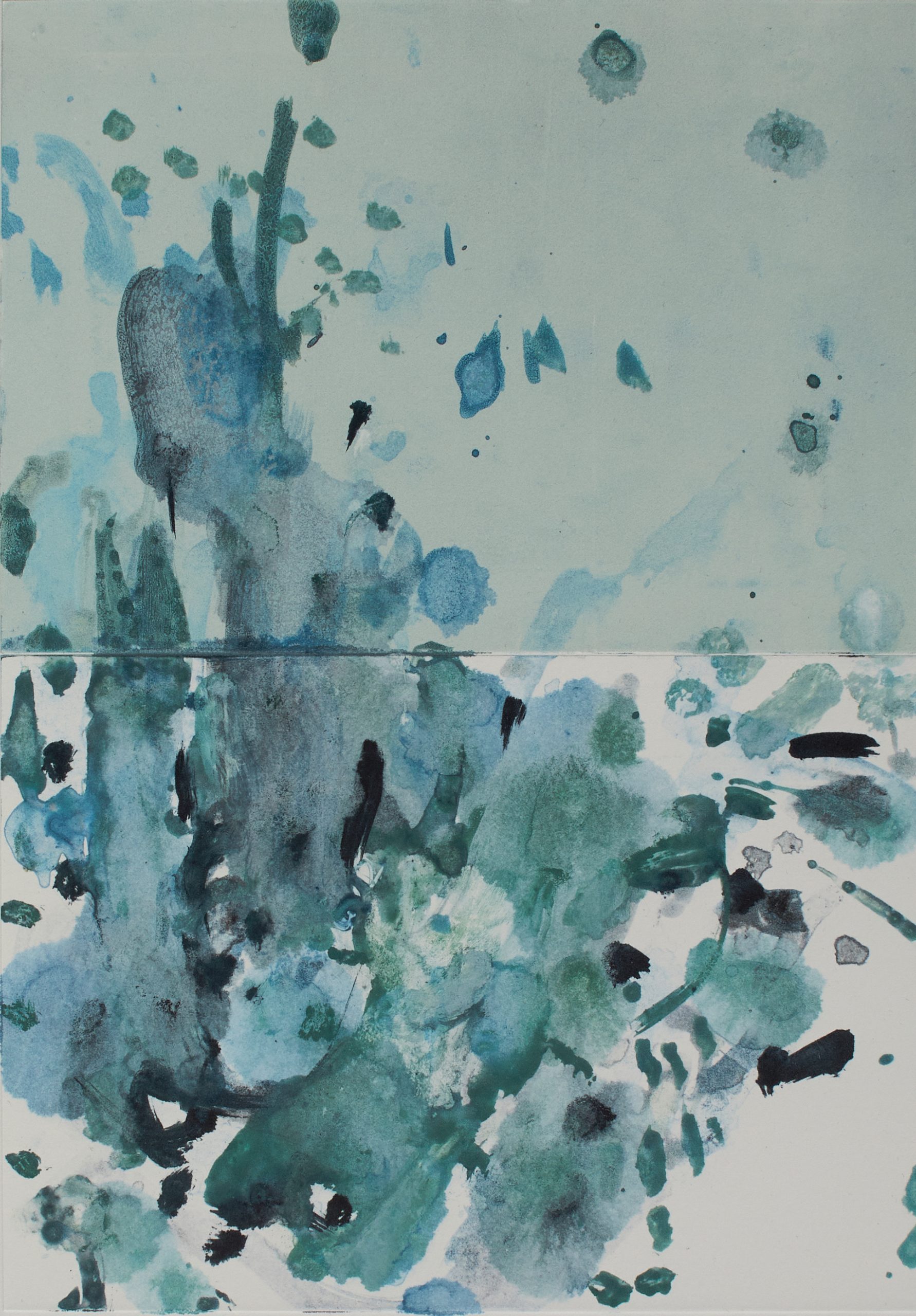

“I would quite like a bit of a shout now.”
Artist Sarah Praill discusses the ideas and archeology behind her exhibition “To carry a feeling” at HAUSPRINT.
With a lot of help from you – our 2024 Crowdfunder story
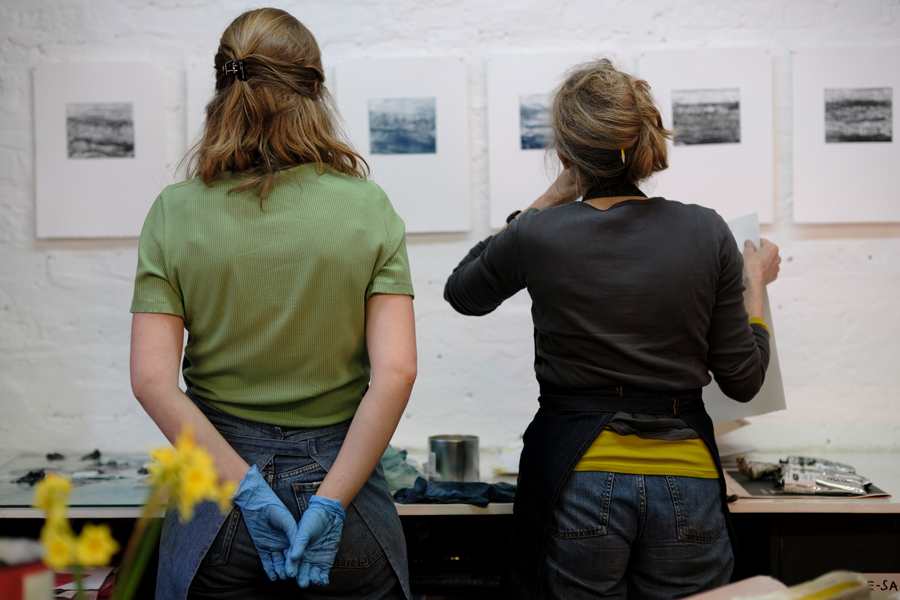
In May 2024 we ran a Crowdfunder appeal to raise £10,000 for two new presses and improvements to the studio. We are thrilled to say that we exceeded our target with donations of over £11,500.