
FEATURE
Hard ground
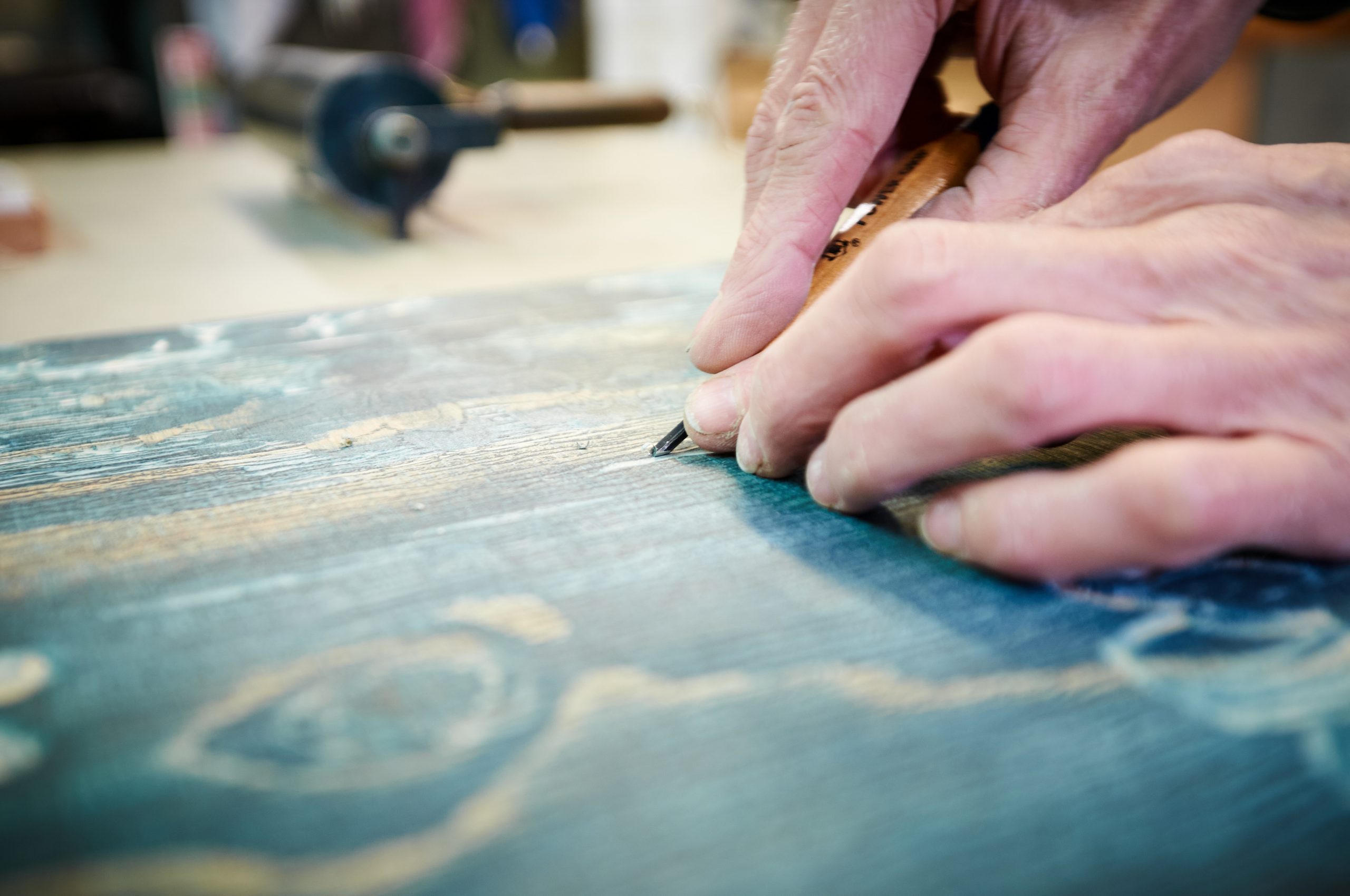
A traditional technique in etching. After degreasing the surface of the plate, hard ground is rolled over the surface.
TECHNIQUE
Hard ground
A traditional technique in etching. After degreasing the surface of the plate, hard ground is rolled over the surface.
Hard ground is made of a mixture of asphaltum, resin and beeswax and is resistant to acid. The ground is softened and spread in a thin layer onto copper, zinc or steel sitting on top of a ‘hot plate’. Once even, the ground is made hard by smoking. The carbon from the smoke also darkens the ground so it is easier to see when drawing.
An etching ‘needle’ is traditionally used to draw into hard ground, revealing a fine thin line, but other ways to make marks include abrading or scratching with non-traditional tools like drill bits or wire wool. Hard ground can also be wiped away or painted with different solvents for more organic shapes.
When the plate is submerged in acid the plate will ‘bite’ in any revealed areas, creating indentations in the metal plate. The longer the plate is in the acid, the deeper the lines and marks will be etched.
After being in the acid the hard ground is cleaned off the plate. The plate is inked intaglio – in the lines, grooves or open areas bitten by the acid.
More printmaking techniques

Carborundum
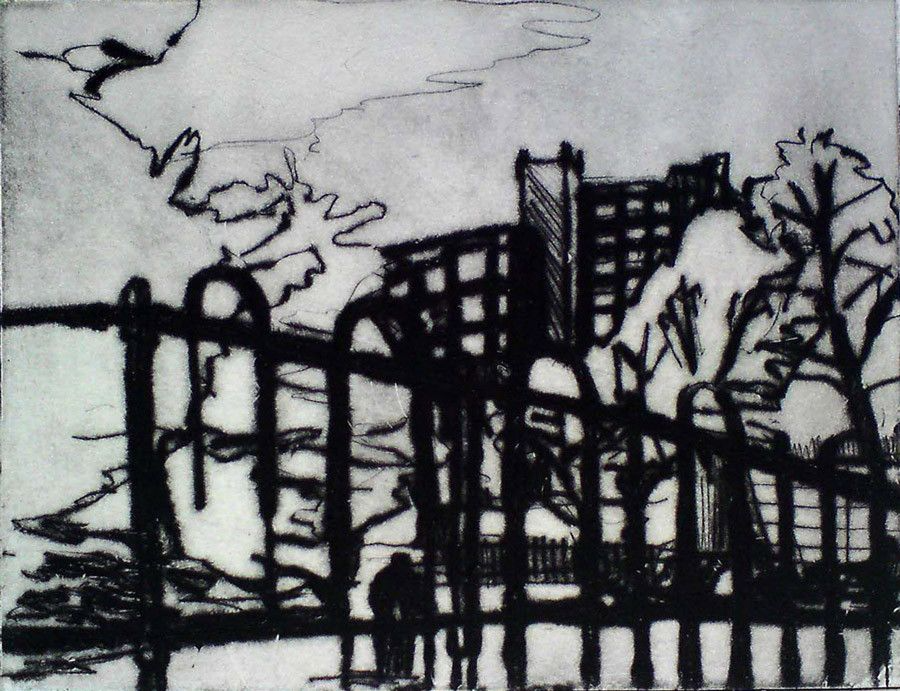
Abrasive carborundum grit (silicon carbide) is mixed with acrylic medium or glue and painted onto a flat surface, such as plastic or metal.

Lithography
An image is painted, drawn or stencilled onto a slab of limestone or a metal plate (often aluminium) with oily materials, including greasy crayons and pencils, special ink called tusche, and photochemical transfers.
More Features
All features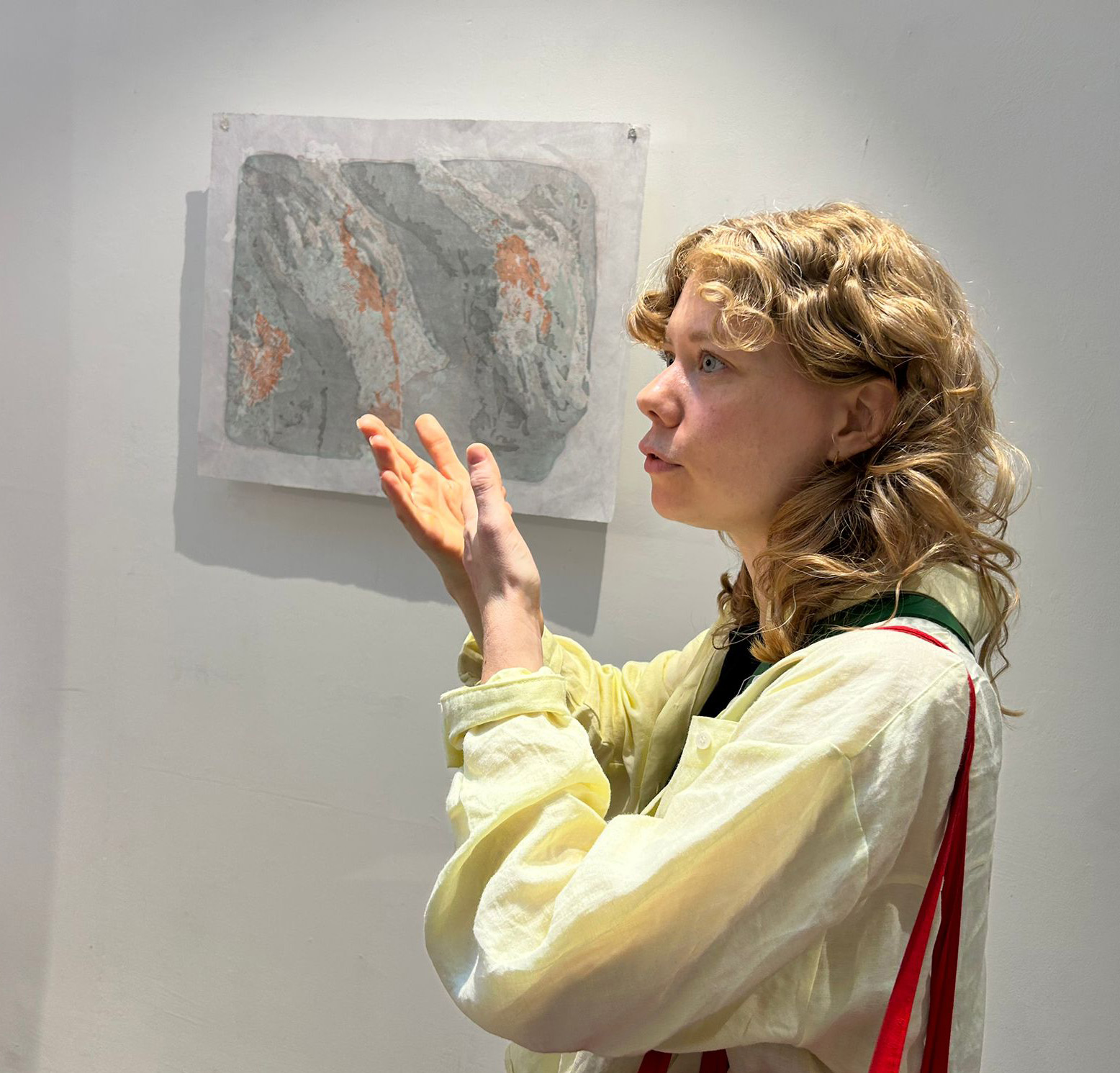
Lizzie Latham
Lizzie Latham is an artist living and teaching in London. She graduated in 2025 from an MA in Printmaking at Camberwell College of Arts.
Lizzie is the recipient of the HAUSPRINT Graduate Studio Prize 2026.
Lithography
An image is painted, drawn or stencilled onto a slab of limestone or a metal plate (often aluminium) with oily materials, including greasy crayons and pencils, special ink called tusche, and photochemical transfers.