FEATURE
Linocut
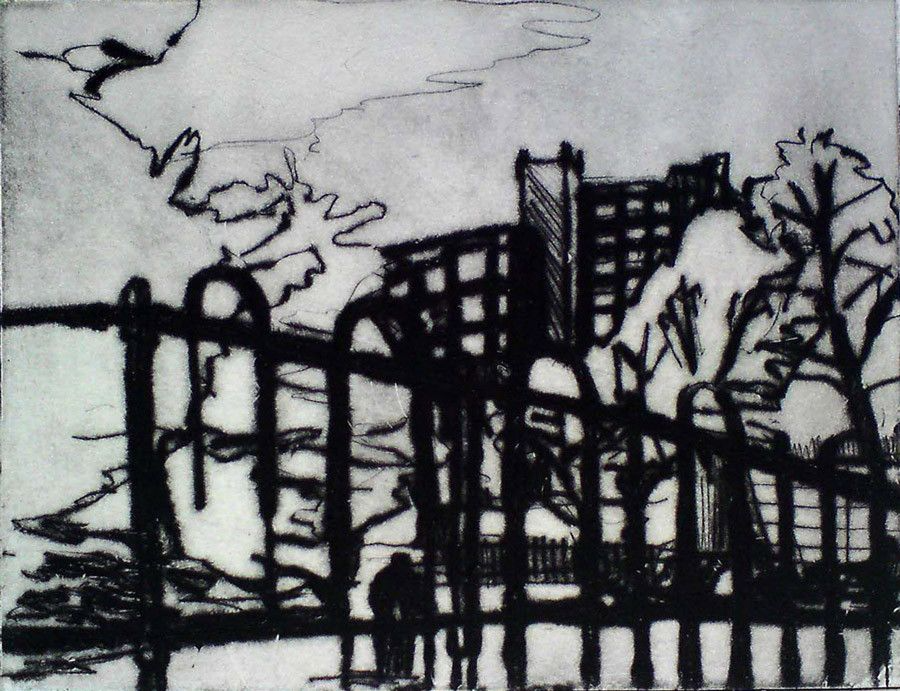
In this relief printing process, an image is carved or etched into a sheet of linoleum. Ink is applied to the lino using a roller; the cut-away areas do not pick up ink. Paper is placed down onto the image and either printed on a press or printed by hand.
TECHNIQUE
Linocut
In this relief printing process, an image is carved or etched into a sheet of linoleum. Ink is applied to the lino using a roller; the cut-away areas do not pick up ink. Paper is placed down onto the image and either printed on a press or printed by hand.
In this relief printing process, an image is carved or etched into a sheet of linoleum. Ink is applied to the lino using a roller; the cut-away areas do not pick up ink. Paper is placed down onto the image and either printed on a press or printed by hand.
More printmaking techniques


Lithography
An image is painted, drawn or stencilled onto a slab of limestone or a metal plate (often aluminium) with oily materials, including greasy crayons and pencils, special ink called tusche, and photochemical transfers.

Etching
Etching was originally invented as a method for adding decoration to armour during the Middle Ages. Artists began to use metal plates for printing in the 15th century, when Albrecht Durer made work on iron plates. Later artists such as Andrea Mantegna in Italy and Rembrandt in Holland went on to make etchings on copper.
More Features
All features
Soft ground
Soft ground was invented in the latter half of the eighteenth century as a means of reproducing the grainy qualities of chalk work. It was first used in England by Gainsborough and artists of the Norwich School.
With a lot of help from you – our 2024 Crowdfunder story
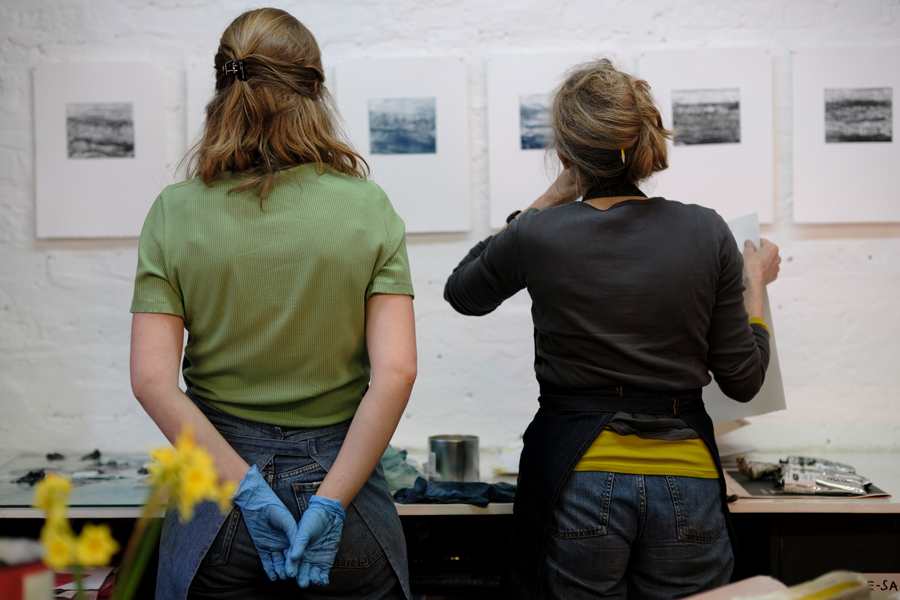
In May 2024 we ran a Crowdfunder appeal to raise £10,000 for two new presses and improvements to the studio. We are thrilled to say that we exceeded our target with donations of over £11,500.