
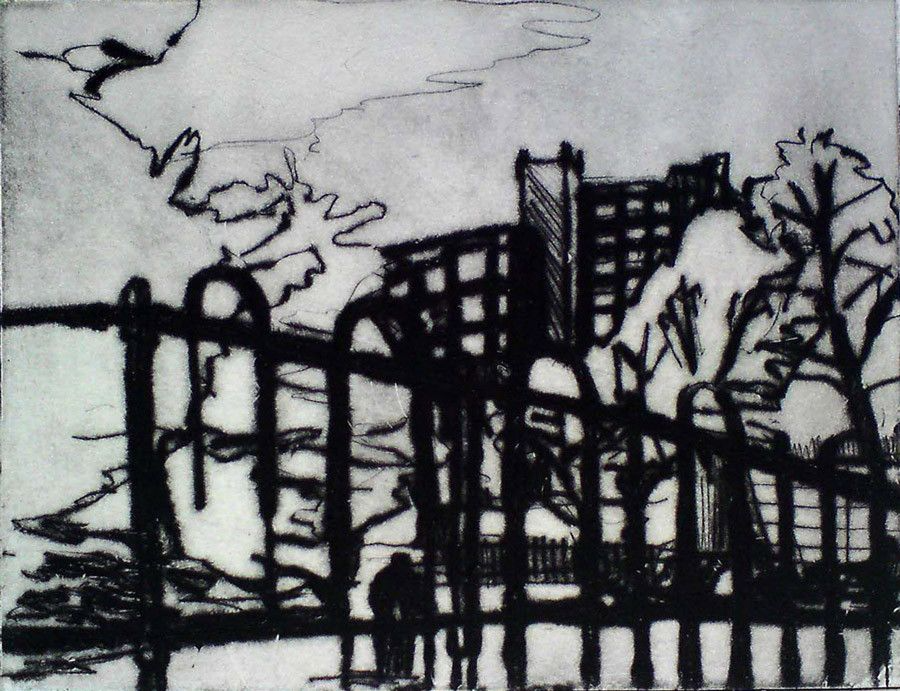
 Chris Christodoulou: Southwark One Day, Drypoint
FEATURE
Drypoint
Using a sharp pointed tool like an etching needle, an image is scratched into a flat polished sheet of metal such as copper or aluminium. Plastic or card can also be used.
TECHNIQUE
Drypoint
Using a sharp pointed tool like an etching needle, an image is scratched into a flat polished sheet of metal such as copper or aluminium. Plastic or card can also be used.
Ink is worked into the image and excess ink wiped away.
Paper is placed on top of the plate and printed using an etching press. Drypoint lines are often described as blurry, with a velvety feel.
more printmaking techniques

Etching
Etching was originally invented as a method for adding decoration to armour during the Middle Ages. Artists began to use metal plates for printing in the 15th century, when Albrecht Durer made work on iron plates. Later artists such as Andrea Mantegna in Italy and Rembrandt in Holland went on to make etchings on copper.

More Features
All features
Soft ground
Soft ground was invented in the latter half of the eighteenth century as a means of reproducing the grainy qualities of chalk work. It was first used in England by Gainsborough and artists of the Norwich School.
Etching
Etching was originally invented as a method for adding decoration to armour during the Middle Ages. Artists began to use metal plates for printing in the 15th century, when Albrecht Durer made work on iron plates. Later artists such as Andrea Mantegna in Italy and Rembrandt in Holland went on to make etchings on copper.
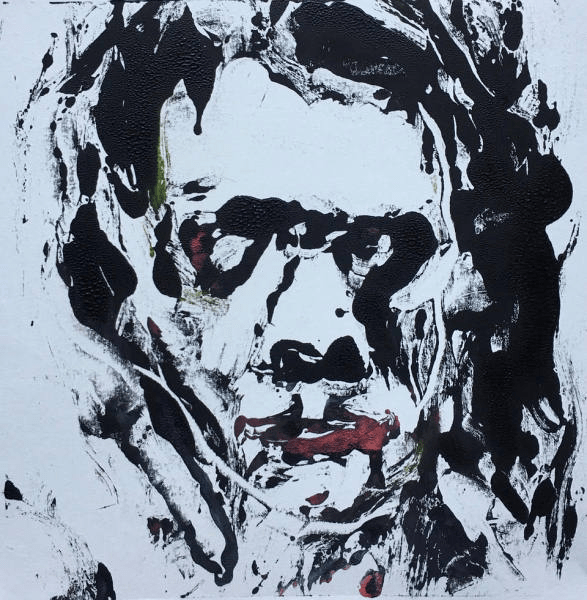
Incredibly dark and incredibly light
“When I’m sitting in a ballet rehearsal I don’t have access to a table or any printing things so I have to make the monoprints from sketches when I get home. There’s a lot of bodies, there’s a lot of faces, a lot of movement.”